Wastewater Operator Salary Guide 2026
Wastewater treatment is the invisible backbone of modern civilization. While often overlooked by the general public, the professionals who manage these facilities play a critical role in public health and environmental protection.1 As of 2026, the landscape for wastewater operator salaries is shifting, driven by a wave of retirements, increased regulatory demands, and a growing emphasis on "green" infrastructure.
If you are considering a career in this field or are a seasoned pro looking to benchmark your earnings, here is a comprehensive look at what wastewater operators are making today, backed by the latest Bureau of Labor Statistics (BLS) data.
1. The National Outlook: 2026 Averages
The median annual wage for Water and Wastewater Treatment Plant and System Operators was $58,260 ($28.01/hour). The top 10% of earners in the field exceeded $86,160.
In early 2026, the national average continues to hover between $53,000 and $58,000. However, the floor and ceiling in this industry remain miles apart based on experience:
- Entry-Level (Bottom 10%): ~$37,870
- Mid-Level/Licensed (Median): $58,260
- Senior/Specialist (Top 10%): $86,160 – $120,000+
While the BLS Occupational Outlook projects a slight decline in total positions through 2034 due to automation, the demand for skilled, licensed operators remains high. A massive portion of the current workforce—the "Silver Tsunami"—is reaching retirement age, leaving a vacuum of leadership.
2. Geographical Hotspots: Where the Money Is
Location is the single biggest determinant of your paycheck. States with high costs of living or strict environmental regulations typically offer the highest compensation.
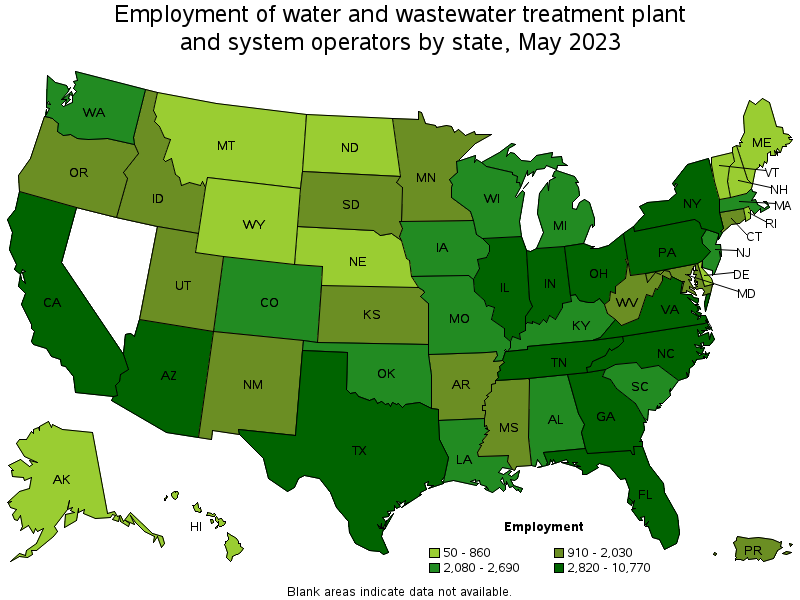
Top 5 Highest Paying States
| State | Annual Mean Wage | Hourly Mean |
|---|---|---|
| California | $81,510 | $39.19 |
| Washington | $80,850 | $38.87 |
| New Jersey | $73,260 | $35.22 |
| Massachusetts | $69,710 | $33.51 |
| Alaska | $65,009 | $31.25 |
View full state-by-state BLS data →
In high-demand metros like San Francisco-Oakland, mean annual wages reach $105,340. Conversely, states in the Southeast and Midwest, such as Arkansas or West Virginia, see averages closer to $44,000 - $48,000, reflecting a lower cost of living.
3. The Power of the License
In wastewater, your license is your currency. Most states use a tiered certification system (usually Class I through Class IV). According to Payscale data, a Level 4 certification can command a base salary average of $85,000+.
Each step up in licensure typically triggers a 10% to 15% salary bump.
Source: Shutterstock / Treatment Plant Infrastructure
4. Industry Matters: Public vs. Private
Where you work influences your pay structure. According to BLS industry profiles:
- Local Government Highest Employment: $58,470 average. Known for superior pension plans and job stability.
- Waste Management/Remediation: $58,540 average.
- Electric Power Generation: $90,720 average. This is a high-paying niche for operators in utility plants.
- Manufacturing: $56,900 average.
5. Benefits: The "Hidden" Salary
When evaluating a wastewater salary, the base number is only half the picture. Because most positions are within the public sector, the "Total Compensation" package is often much higher.
- Pensions: Defined-benefit plans remain common in municipal roles.
- Education Reimbursement: Many utilities cover costs for WEF Certification and environmental science degrees.
- Recession-Proofing: Wastewater is an "essential service," offering unmatched job security during economic downturns.
6. Future Trends: Will Pay Keep Rising?
Upward pressure on wages is expected through 2030 due to:
- Scarcity of Talent: Municipalities are raising starting wages to compete with construction and manufacturing.
- Technological Complexity: High-tech hubs utilizing MBR (Membrane Bioreactors) and SCADA systems require tech-savvy operators who command professional-grade salaries.
- Infrastructure Funding: Federal investments via the Bipartisan Infrastructure Law are driving facility upgrades and higher-skilled staffing needs.